
The quick answer
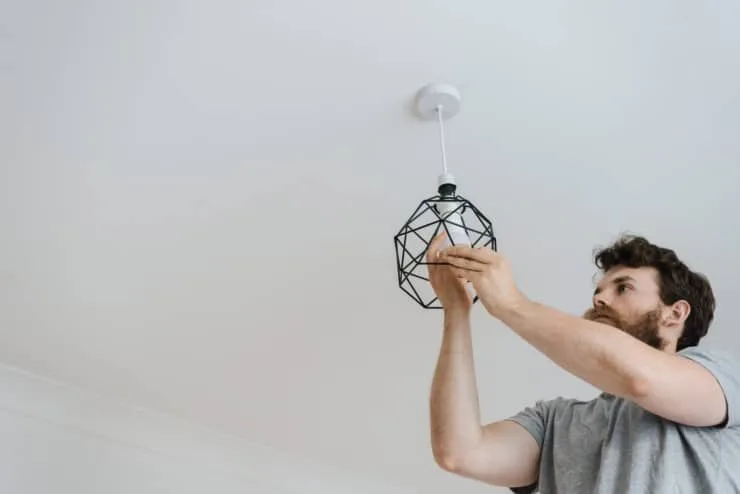
Turn the light off at the circuit breaker, not just the wall switch. Most screwless covers either twist off, usually counterclockwise, or release from clips or levers near the rim. Support the cover with one hand as it lets go, and stop if it resists. If you can't find how it attaches, look up the fixture's model number and its manual.
A cover with no visible screws looks like it was glued on. It wasn't. It's held by a quarter-turn lock, a few spring clips, a friction fit or a hidden fastener, and each one takes a different move. Pulling hard on the wrong type cracks the glass or plastic, and the fixture is wired to household current, so a mistake with the power on does more than break a cover.
Turn the Power Off at the Breaker
Do this before the ladder comes out. The Electrical Safety Foundation International (ESFI) says to turn off the power to the circuit you're working on at the breaker in the main service panel, then test the wires before touching them to confirm the power is off. A wall switch alone is no guarantee the fixture is dead, so the breaker is the one to trust. Family Handyman's fixture guide gives the same order: switch and circuit breaker off, then take the bulb out.
Testing means a voltage tester. Removing a cover usually doesn't expose wires, but testing costs a minute and protects you if the cover turns out to be part of the mounting plate. Label the breaker, or tell everyone in the house, so no one flips it back on while you're up there.
ESFI recommends a licensed electrician for any electrical work, and that includes anything beyond swapping a bulb or a cover.
Set Up Safely
Most injuries here come from the ladder, not the fixture. CPSC's ladder guidance says to put the ladder on level, firm ground, stay off the top step and bucket shelf, keep your belt buckle between the side rails, and have someone hold the bottom. Don't stand or climb on the rear section of a stepladder. A step stool that makes you stretch is the wrong height. Get a taller one.
Put a towel or a piece of cardboard on a nearby surface for the cover. Wear safety glasses, because dust and debris drop when a cover comes free. Work gloves help with grip and with sharp edges on a cracked rim.
Find Out How It Attaches
Look before you pull. Run a finger around the rim and check the cover and the base for these clues:
- A small notch, tab or bump on the rim suggests a twist-and-lock cover.
- Small levers or clips along the fixture's sides suggest a clip or latch cover.
- A center knob or cap on the underside means a finial may be holding it, so loosen that first.
- A smooth rim with nothing visible often means a friction fit or clips hidden inside the rim.
This list is a rule of thumb from retailer and lighting-seller guides, not a standard. Brands differ. The reliable source is the fixture's own paperwork. The model number is usually printed on a label inside the fixture or on the base, and the maker's support page will have the manual.
Removal by Type
Twist covers
A lighting retailer's guide says most screwless covers use a clip or twist mechanism. For a twist cover, hold the edges firmly with both hands, rotate it gently counterclockwise, then lower it. Rotate a few degrees at a time. If it doesn't move at all, try the opposite direction before applying more force.
Clip or latch covers
Find the small levers or clips along the sides. Press or slide the clip to release the catch, then pull the cover down while keeping a firm grip. Work around the rim one clip at a time. Releasing one clip while the others hold lets the cover tilt, so keep a hand underneath. A thin plastic tool is safer than a screwdriver for prying, because metal scratches the finish and can slip.
Friction-fit covers
These sit tight against the base and release when pulled evenly. Grip opposite sides and pull down gently while turning slightly side to side. If you have to yank, you're missing a catch, so stop and look again. The same retailer warns that too much pressure can damage the cover or the fixture, and can make the cover drop suddenly.
Bulbs and Reinstalling
Let a recently used bulb cool before touching it. Match the replacement to the fixture's rating. CPSC's home electrical checklist says a bulb of higher wattage than recommended can overheat the fixture, wiring or nearby combustible materials, and for fixtures with no marking it suggests 60 watts or less. If the cover fully encloses the bulb, check the package, because the Department of Energy notes that enclosed fixtures trap heat and certain LED products need to be rated for that use.
To put the cover back, line up the tabs or clips and seat it without forcing. The lighting seller warns that forcing a cover back on can shatter it. Switch the breaker on only after the cover is secure, then test the light.
When to Stop and Call Someone
Stop if the whole fixture twists or sags when you handle the cover, if you see scorched plastic, brown marks, melted insulation or exposed wires, or if the fixture is still warm with the power off. Those point to a wiring or heat problem that needs an electrician, not a better grip.
Frequently Asked Questions
Do I need to turn off the power to change a bulb under a cover?
Yes, switch it off at the breaker to be safe. ESFI says to turn off the circuit at the main panel and test the wires before touching them, and Family Handyman says switch and breaker off before removing a bulb from a fixture.
Which way do I turn a twist-off ceiling light cover?
Most guides say counterclockwise. Turn a few degrees at a time, and if it won't move, check for a hidden clip or finial before forcing it.
Why do screwless light covers exist?
No maker or standards source explains this. The likely reason, and it's a judgement, is that clips and twist locks are quick to fit and leave a clean look with no screw heads showing.
What if the cover won't come off?
Stop pulling. Look for a finial or a notch, find the fixture's model number and check the manual, and call an electrician if the fixture moves or shows heat damage.
Sources
- ESFI: Home Electrical Safety workbook (breaker off at the panel, test wires, licensed electrician)
- Family Handyman: Upgrade a recessed light fixture (switch and circuit breaker off before removing the bulb)
- Cloudy Bay Lighting: How to remove a ceiling light cover with no screws (twist and clip covers, avoiding force)
- CPSC OnSafety: Ladder Safety 101 (level ground, top step, belt buckle, helper)
- CPSC: Home Electrical Safety Checklist (bulb wattage and the 60 watt guidance)
- US Department of Energy FEMP: Purchasing Energy-Efficient Light Bulbs (enclosed fixtures and LED heat)
Cover mechanisms differ by maker. The type clues above come from retail and lighting-seller guides, so confirm with your fixture's manual.