

The quick answer
First rule out the dangerous smells. A strong rotten egg smell means a possible gas leak: leave and call your gas company from outside. A burning plastic smell means a possible electrical fault. Carbon monoxide has no smell at all, so a working alarm is the only warning. If none of those fit, the usual causes are new furniture or flooring, paint, cleaning products, stored chemicals or mixed cleaners. Ventilate, find the source and remove it.
A chemical smell is easy to ignore until it gives you a headache. Some causes are harmless nuisances that fade in days. A few are emergencies. This guide puts the urgent cases first, then the everyday causes, then what to do about them. Sources are listed at the end. Where a step is our own judgment rather than a published rule, we say so.
Act Now If You Notice These
- Strong rotten egg or sulfur smell. Natural gas has no smell of its own. Gas companies add a rotten egg odor so leaks can be noticed. Poison Control says a strong sulfur smell makes a gas leak very likely. Connecticut's utility regulator says that if the odor is strong or you're unsure, leave the building right away and call your gas company from outside. Don't flip light switches, use a phone inside, or light anything. Don't go back in until the gas company says it's safe. You can also call 911.
- Burning plastic smell, or a warm outlet or switch plate. The U.S. Consumer Product Safety Commission (CPSC) lists a burning plastic smell and warm faceplates as signs of a wiring problem. Our judgment: stop using that outlet, switch off its breaker if you can do it without opening the panel cover, and have a licensed electrician look at it. If you see smoke or sparks, get out and call 911.
- Headache, dizziness and nausea in several people at once, with no smell. Think carbon monoxide. The CPSC calls it colorless and odorless. If a CO alarm sounds, don't look for the source. Move outside, call 911 or the fire department, and stay out until responders say it's safe.
- Someone swallowed a chemical, or has trouble breathing after fumes. Call Poison Control on 1-800-222-1222 (free, 24 hours). Call 911 for breathing trouble.
The Everyday Causes
The U.S. Environmental Protection Agency (EPA) says volatile organic compounds (VOCs) are gases given off by many household products and materials. It lists paints, solvents, aerosol sprays, cleaners, air fresheners, stored fuels, hobby supplies, dry-cleaned clothing, pesticides, glues, markers, building materials and furnishings. The EPA also says indoor levels of many VOCs are often up to ten times higher than outdoors.
| Likely cause | Where to look | First move |
|---|---|---|
| New furniture, cabinets, flooring or carpet | Anything installed or delivered recently | Open windows, run fans, keep doors open |
| Paint, varnish, glue | Rooms being redone, plus half-used cans | Ventilate, close lids tightly, move cans out of living areas |
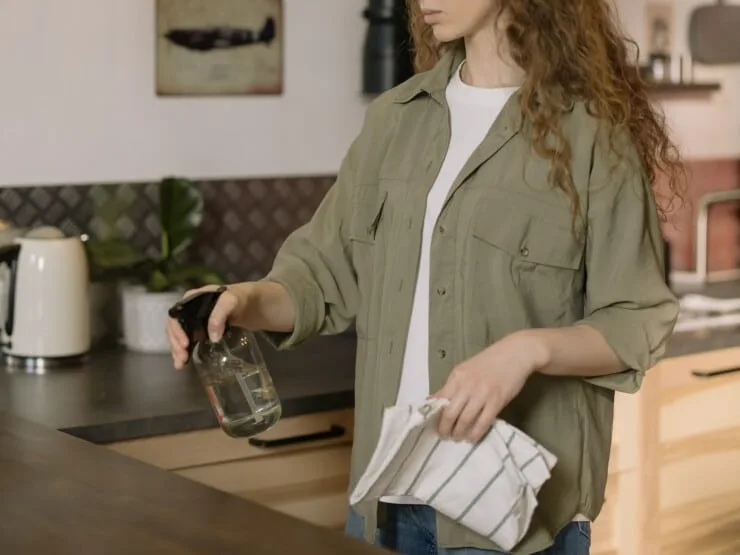
| Cleaning products | Under sinks, laundry area, recently cleaned rooms | Ventilate, stop using the product, never mix cleaners |
| Mothballs, pesticides, fuels | Closets, attic, garage, shed, basement | Find and remove the container |
| Dry-cleaned clothes | Closets and bedrooms | Air the clothes outside |
| Musty, damp smell | Bathrooms, laundry rooms, leaks | Look for moisture and mold |
New furniture, flooring and building materials
The EPA lists building materials and furnishings as VOC sources, and notes that concentrations can stay elevated long after the activity ends. For formaldehyde, the EPA says composite wood products such as plywood and particleboard are a source. It describes formaldehyde as a gas with a strong odor that can irritate the skin, eyes, nose and throat. We found no authoritative source for an exact number of days a new item keeps smelling, so we won't give one. If the smell is not fading after a few weeks, treat it as a sign to look harder (our judgment).
Mixed or spilled cleaners
Poison Control explains that bleach mixed with ammonia makes chloramine gas, and bleach mixed with an acid, such as some toilet bowl cleaners, makes chlorine gas. Symptoms include burning eyes, nose and throat, and coughing. Serious signs are chest pain, wheezing and shortness of breath. Leave the area, get fresh air and open windows. Call Poison Control, and call 911 if breathing is difficult. Chlorine gas is heavier than air, so it can linger near the floor.
Musty or sewage-like smells
Poison Control lists mold, leaky or backed-up pipes and drains, spoiled food, litter boxes and garbage disposals as common sources. Mold smells musty, damp or earthy. The EPA says hidden mold is possible when a building smells moldy but you can't see the source. A dried-out drain trap can also let drain odor into a room, but we did not find a government page on that, so treat it as a plumber's question if running water through the drain doesn't help.
Health Effects and Who Is at Risk
The EPA lists eye, nose and throat irritation, headaches, loss of coordination and nausea as effects of VOC exposure. Some VOCs can damage the liver, kidneys or central nervous system, and some are suspected or known to cause cancer. The EPA also says effects depend on how much you breathe and for how long, and that not much is known about the effects of the levels typically found in homes.
The EPA says children, older adults and people with health problems can be especially affected by indoor pollutants, and that children with asthma are especially sensitive. Pets live closer to the floor and sleep in the room, so a reasonable precaution (our judgment) is to move them to fresh air when a smell is strong. A smell is also not a reliable measure of danger. Some harmful gases have no odor, and the Centers for Disease Control and Prevention (CDC) notes that the smell of hydrogen sulfide can fade with exposure.
What to Do, Step by Step
- Get fresh air moving. The EPA suggests opening windows and doors when weather allows, and using bathroom and kitchen fans that vent outdoors.
- Follow your nose, then check the obvious spots. Walk room to room. Check closets, the garage, under sinks and recently changed rooms. Poison Control also points to the trash, disposal and dishwasher.
- Remove the source. Take leaking, old or unneeded containers out. The EPA advises keeping opened paint and similar products away from living spaces and using local collection days for disposal.
- Close lids tightly. The EPA notes gases can leak even from closed containers, so store chemicals in the garage or shed, not in the house.
- Read labels. Follow label directions and don't mix household products unless the label says to.
- Check for moisture. Fix leaks and remove mold, as Poison Control advises.
When to Call Someone
- Gas company or 911: any strong gas smell, or a hissing appliance.
- Licensed electrician: burning plastic smell, warm outlets, or flickering lights.
- Poison Control (1-800-222-1222): unknown fumes, symptoms you think come from fumes, or swallowed products.
- Plumber or mold specialist: a persistent sewage or musty smell you can't trace.
- Your doctor: symptoms that keep coming back when you're home and ease when you're away (our judgment).
Keeping It From Coming Back
Fit carbon monoxide alarms on every level and outside sleeping areas, as the CPSC recommends. Buy only the quantity of paint and chemicals you'll use soon, as the EPA advises. Ventilate whenever you use solvent-based products.
Frequently Asked Questions
Is a chemical smell in my house dangerous?
It can be. A strong gas smell, burning plastic smell or fumes from mixed cleaners need action right away. Many everyday chemical smells come from products and materials that give off VOCs, which can cause headaches and eye, nose and throat irritation. Smell alone doesn't tell you how dangerous it is.
Does carbon monoxide have a smell?
No. The Consumer Product Safety Commission calls carbon monoxide colorless and odorless. Alarms on every level and outside sleeping areas are the warning, so a chemical smell is not a sign of carbon monoxide.
What should I do if I smell gas?
If the smell is strong or you're unsure, leave the building and call your gas company or 911 from outside. Don't flip switches, use a phone inside or light anything. Stay out until the gas company says it's safe.
Why does my house smell like chemicals after new flooring or furniture?
New building materials and furnishings give off VOCs. Open windows, run fans and keep air moving. The EPA says these gases can persist long after the work ends, so keep ventilating.
Who should I call about unknown fumes?
Poison Control at 1-800-222-1222, or the web POISON CONTROL tool. It's free, confidential and open 24 hours a day.
Sources
- U.S. EPA: Volatile Organic Compounds' Impact on Indoor Air Quality (VOC sources, effects, ventilation and storage)
- U.S. EPA: Care for Your Air, A Guide to Indoor Air Quality (ventilation and sensitive groups)
- U.S. EPA: Facts About Formaldehyde (composite wood, odor, irritation)
- U.S. EPA: A Brief Guide to Mold, Moisture and Your Home (hidden mold and moldy odors)
- Poison Control: Identifying unknown fumes in your home (causes, gas, mold, CO, burning smells, who to call)
- Poison Control: Chlorine gas (mixing bleach with ammonia or acids)
- Connecticut PURA: What to do if you smell natural gas (leaving and calling from outside)
- U.S. CPSC: Carbon Monoxide Fact Sheet (no smell, alarms, what to do)
- U.S. CPSC: Electrical Safety Month release (burning plastic smell and warm faceplates)
- CDC/ATSDR: Hydrogen Sulfide medical management guideline (smell fades with exposure)
This page is general information, not medical or emergency advice. In an emergency, call 911.