

The quick answer
A sharp, pungent smell in the house is most often an air cleaner that makes ozone on purpose or by accident, an older laser printer or copier, or sparking electrical equipment. Switch off any ozone-making device and open windows. If the smell comes with a burning odor, sparks, a hot outlet or a buzzing panel, stop using that circuit and call a qualified electrician. If you smell rotten eggs, leave and call the gas company from outside.
Ozone is a lung irritant. That is why a strange smell like this is worth tracking down, even when it turns out to be a gadget you bought yourself. Smell also makes a poor alarm. The EPA says people differ widely in how well they can smell ozone, and that not smelling it does not mean the level is safe.
This page covers what ozone smells like, the common sources inside a home, what to do about each one and when to call for help. It's one of the smells in our guide to strange smells in the house, which shows which ones need action now.
Check for danger first
An ozone smell can be harmless, but a few nearby smells are not. Rule these out before you look for a gadget.
- Strong rotten egg or sulfur smell. That points to a gas leak, not ozone. Connecticut's utility regulator says to leave the building if the smell is strong or you're unsure, then call your gas company from a phone away from the smell. Don't touch light switches, use a phone inside, or light anything. You can also call 911.
- Burning smell, sparks, hot outlets or a buzzing sound. These are electrical warning signs. The U.S. Consumer Product Safety Commission (CPSC) lists sparks, sizzling or buzzing, hot switch plates and outlet covers, and the odor of hot insulation as warnings. It says finding and fixing defects is a job for a qualified electrician.
- Visible smoke or fire. Get everyone out and call 911 from outside.
- Headache, dizziness or nausea in several people at once. Carbon monoxide has no smell. The CDC says it is odorless and can kill without warning. Only a working carbon monoxide alarm will catch it.
What ozone smells like, and why you can't trust your nose
The CDC's NIOSH Pocket Guide describes ozone as a colorless to blue gas with a very pungent odor. A smell that fits that description is a lead, not proof that ozone is what you're smelling.
The EPA is blunt about this. It says the ability to smell ozone varies considerably from person to person, and that lack of odor doesn't guarantee a safe level. It also says the smell can mask other odors without removing them. A room that smells fresh after an ozone device has run has not necessarily been cleaned.

Common sources of an ozone smell in a home
Ozone generators and air cleaners
This is the first place to look. The EPA says ozone generators sold as air cleaners have not been approved by any federal agency for use in occupied spaces. It says that at levels within public health standards, ozone has little potential to remove indoor contaminants. It does not remove carbon monoxide, formaldehyde or particles like dust and pollen, and it can create irritating byproducts such as aldehydes.
Some devices make ozone as a side effect. The EPA names electrostatic precipitators, ionizers, plasma air cleaners and UV lights without adequate lamp coatings. If you bought a purifier and the smell started soon after, check the manual and the product page. Look for the words "ozone," "ionizer," "plasma" or "activated oxygen."
The EPA says the California Air Resources Board and the Association of Home Appliance Manufacturers each keep lists of air cleaners tested and shown to emit little or no ozone. The EPA does not certify or recommend specific brands.
Laser printers and copiers
A NIOSH chamber study of four laser printers found that older models with a corona wire produced significant ozone. Newer printers with a charged roller produced little. Maintaining the ozone filter on older machines tended to reduce output. Other NIOSH evaluations in offices recorded the highest readings right at the exhaust. That study was run in a test chamber, so it tells you which designs are the likelier source, not how much your own printer puts into your room.
In a home office, an old copier or laser printer in a small closed room can be the source. Move it near an open window or into a larger room, and check whether the manual calls for a filter change.
Sparking or arcing electrical equipment
Electrical equipment can make ozone. A California Department of Justice evaluation notes that ozone is generated by electrical equipment, and that a corona wand's electric filament generates it. A smell that seems to come from an outlet, switch, power strip, motor or breaker panel deserves attention for a different reason: the equipment may be failing.
The CPSC lists arcs and sparks, sizzles and buzzes, overheating and the odor of hot insulation as warnings of potential hazards. Warm switch plates are normal. The CPSC says they should never be hot, painful to touch or discolored from heat. It also lists any shock, even a mild tingle, as a possible warning.
We could not find a government source that says an ozone-like smell by itself proves an electrical fault. Treat that link as a reasonable lead, not a diagnosis. If the smell seems to come from a particular outlet, appliance or panel, stop using it and have a qualified electrician look.
Outdoor ozone coming indoors
The EPA says outdoor ozone gets into buildings. Typical indoor levels from outdoor air run about 0.01 to 0.02 ppm, and can reach 0.03 to 0.05 ppm. That is generally a low level, and you may not smell it at all. It is not a likely explanation for a strong smell inside one room.
Health effects of ozone
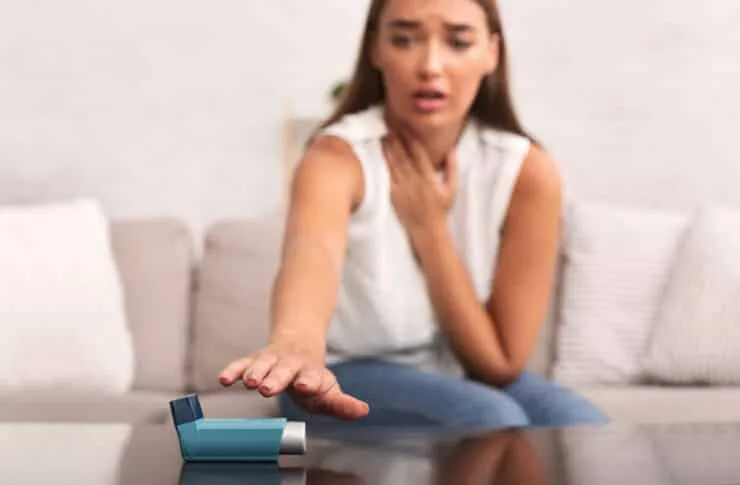
The EPA says inhaled ozone can damage the lungs. Even small amounts may cause chest pain, coughing, breathlessness and throat irritation. It can worsen asthma and weaken defenses against respiratory infection.
Some people are more at risk. The EPA lists people with asthma, children, older adults, people active outdoors and people with certain genetic traits or lower intake of vitamins C and E. Symptoms include wheezing, shortness of breath, coughing, a sore throat and pain on deep breaths.
The numbers help show why a gadget can be a problem. The FDA requires ozone output of indoor medical devices to be no more than 0.05 ppm. OSHA's limit for workers is an average of 0.10 ppm over 8 hours, and NIOSH recommends a 0.10 ppm ceiling. The EPA reports that a large unit in a 350 square foot room reached 0.50 to 0.80 ppm in one study, and that another study found 0.20 to 0.30 ppm in homes with doors closed.
If you have asthma or a lung condition and you've been breathing the smell, ask your doctor. If you have trouble breathing, seek emergency care.
What to do about it
- Turn off every air cleaner, ionizer and similar device. Leave them off for a day. If the smell fades, you've found it.
- Open windows and let fresh air in. The EPA's advice for cutting exposure to ozone devices includes staying farther from the unit and keeping interior doors open.
- Check the product. Look for ozone, ionizer or plasma on the box or listing. If it makes ozone on purpose, stop using it in rooms where people or pets stay.
- Move or service the printer or copier. Put it in a ventilated space and check whether the model has a filter to replace.
- Unplug anything that smells. If the smell seems to come from a particular outlet, cord, power strip or appliance, unplug it if you can do so safely, and don't use it again until it has been checked.
- Call an electrician for any smell tied to the panel, outlets or wiring, or when sparks, buzzing or warm plates come with it. Don't open the service panel cover yourself.
Better ways to clean indoor air
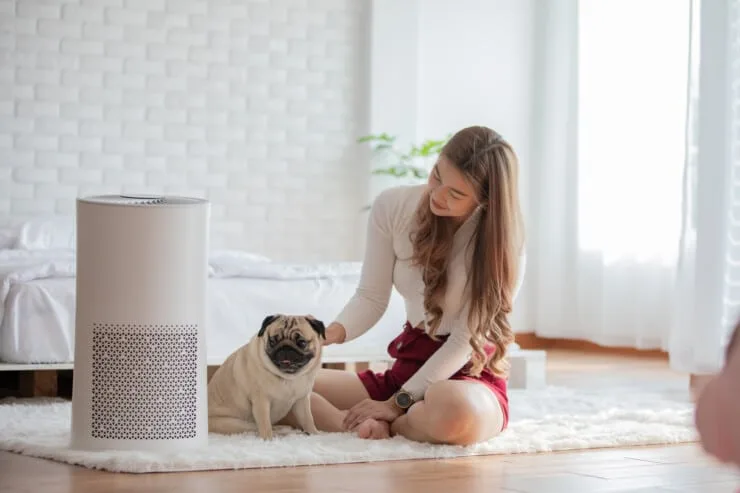
The EPA recommends source control, ventilation and proven air cleaning instead of ozone. Fix what is making the air bad, open windows when outdoor conditions allow, and use a filter-based purifier if you want one. A mechanical filter traps particles and does not make ozone. Shop for a model that says so, and check it against the CARB or AHAM lists the EPA points to.
Frequently asked questions
Is it safe to smell ozone in my house?
Not as a rule. The EPA says ozone is a lung irritant and that even small amounts can cause coughing, chest pain and throat irritation. Smell is also unreliable, so you can't judge safety by how strong it seems.
Can an electrical problem smell like ozone?
Possibly. Electrical equipment can generate ozone, and the CPSC lists sparks, buzzing, hot plates and the odor of hot insulation as warnings. Stop using the suspect outlet or device and call a qualified electrician.
Does my air purifier make ozone?
Only some do. The EPA names ozone generators, ionizers, electrostatic precipitators, plasma units and UV lights without adequate lamp coatings as possible sources. Check the manual and the CARB and AHAM lists of low-ozone air cleaners.
Can a laser printer cause an ozone smell?
Yes, especially an older one. A NIOSH chamber study found that older printers with a corona wire made significant ozone, while newer printers with a charged roller made little.
When should I leave the house?
Leave and call from outside if you smell rotten eggs or see smoke. For a strong gas smell, call the gas company or 911 and don't flip switches on the way out.
Sources
- EPA: Ozone Generators That Are Sold as Air Cleaners (Health effects, claims, limits, indoor and outdoor ozone, reducing exposure.)
- EPA: Guide to Air Cleaners in the Home (Devices that may emit ozone, CARB and AHAM lists.)
- EPA: Health Effects of Ozone Pollution (Who is at risk and symptoms.)
- CDC NIOSH Pocket Guide: Ozone (Odor description and exposure limits.)
- NIOSH: Methods for Characterizing Emissions from Laser Printers (Corona wire versus charged roller printers.)
- California Department of Justice: Evaluation of Ozone Exposure from Electrostatic Detection Apparatus (Ozone from electrical equipment.)
- CPSC: Guide to Home Wiring Hazards (Electrical warning signs and professional inspection.)
- Connecticut PURA: What to Do If You Smell Natural Gas (Gas leak steps.)
- CDC: About Carbon Monoxide (Odorless gas, alarms and symptoms.)
- Poison Control: Unknown Fumes (Warning signs and when to call.)