
The quick answer
A basement is one of the better places to be after a nuclear detonation, because it shields you from fallout, the radioactive dust that comes down afterward. It does little against the blast itself if you're close to the explosion. Ready.gov and the CDC give the same three steps: get inside, stay inside, stay tuned. Plan on at least 24 hours in the most protected part of the building unless officials say otherwise.
Most people who would need to shelter in this kind of emergency wouldn't be near the explosion. They'd be miles away, with some time to get inside and a long list of things that could go wrong afterward. Fallout is the part that sheltering handles best. A health physicist at Lawrence Livermore National Laboratory told FEMA's PrepTalks series that casualties from fallout are "almost entirely preventable."
This page covers what a basement does and doesn't do, where to sit in one, and what to do in the first minutes and hours. It sticks to government guidance. Where a source is old, the text says so.
Blast and fallout
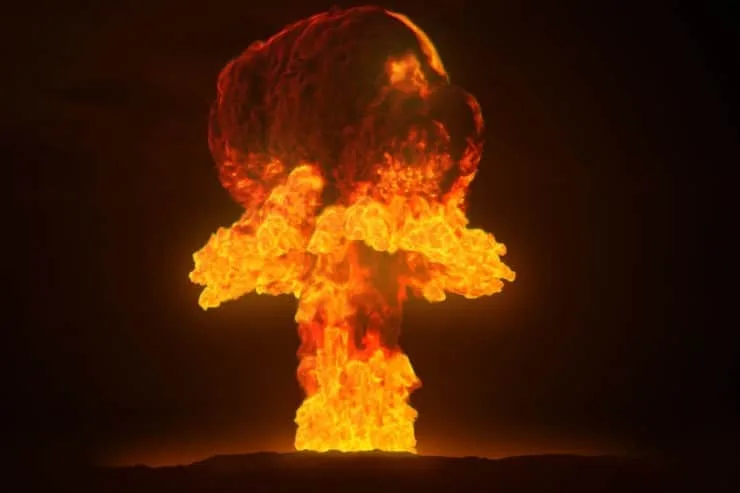
A nuclear explosion releases "an intense pulse of heat, light, air pressure, and radiation," the CDC says. It also lifts dirt and debris that becomes radioactive and falls back to earth, which wind can carry long distances. FEMA's slides break a detonation into three parts: a bright flash that can cause temporary blindness, a blast wave that damages buildings, and fallout.
A basement helps most with the third. Close to the explosion, the blast wave destroys buildings, and no household basement is designed for that. A 1966 Office of Civil Defense booklet on basements says plainly that fallout shelter gives only limited protection against blast. Farther out, where buildings stand, fallout is the main danger.
Fallout isn't a gas. The 1966 booklet describes it as particles that look like dirt or sand, spread in a thin layer that can cover a huge area.
Why a basement helps
The old civil defense booklet gives three ways to cut radiation exposure: time, distance and shielding. Radioactivity falls off fast at first, so the early hours matter most. More distance from the source means less dose. And the thicker and heavier the material between you and the fallout, the better.
A basement gets two of those for free. It's mostly below ground, so soil acts as a shield along the walls. It's also below the roof and the ground-level surfaces where fallout settles. The booklet says basements give the best home protection for exactly this reason.
Current guidance points the same way. Ready.gov lists brick or concrete buildings, basements, underground parking garages and subways as good protection. The CDC says any building is safer than being outside, and that a car gives poor protection. The Ready.gov page also says to take the most protective spot in a basement or the center of a large building for the first 24 hours.
Where to sit in a basement
Official pages today don't say which corner of a home basement is best. The most specific guidance I found is the 1966 booklet, built from a federal analysis of home basements. It's dated, so treat it as a reasoned rule of thumb and not current policy.
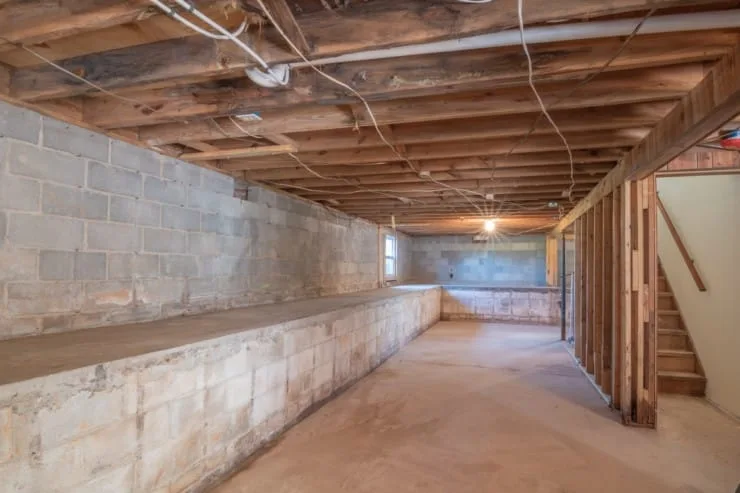
- Pick the corner where the ground outside is highest. The booklet calls that the safest place in the basement.
- Stay low and close to the wall. Protection is better nearer the wall and the floor, so sit on the floor with your back against it.
- The center of the basement had the lowest protection in nearly all the basements analyzed.
- Overhead shielding matters most in a basement that's fully below ground. A sturdy table or workbench in the corner adds some cover.
- Partly exposed walls, such as walk-out or daylight basements, give less protection. The booklet suggests piling earth, sand or similar material against exposed sections as an add-on.
The CDC's advice to go to the middle of the building, away from walls and roof, is aimed at above-ground floors, where fallout settles on the outside and the roof. That's my reading of why the two pieces of advice differ. For a basement, the soil outside the wall is the shield.
The first minutes
If you have warning of a detonation, Ready.gov says to take cover behind anything that offers protection. Outdoors, lie face down to cover exposed skin. After the shockwave passes, go to the nearest building as fast as you can. Ready.gov says you may have 10 minutes or more to reach adequate shelter before fallout arrives. FEMA's slides put the start of fallout at about 15 minutes after the detonation, and say to use that time to find shelter.
Once inside, go to the basement. Then do the following.
- Turn off fans, air conditioners and forced-air heating.
- Close windows, doors and fireplace dampers.
- Bring pets and service animals inside.
- Turn on a battery-powered or hand-crank radio and listen for official instructions.
Don't go out to find family. The CDC says to stay where you are, because schools, hospitals and other facilities have plans to keep people safe indoors.
If you were outside
Removing outer clothing is the biggest single step. The CDC and Ready.gov both say it can remove up to 90% of the radioactive material on you. Take clothes off carefully so you don't shake dust loose, and keep your hands away from your eyes, nose and mouth. Ready.gov says to keep a trash bag in your supply kit for contaminated clothing.
Then wash with soap and water if you can. If not, wipe exposed skin and hair with a clean damp cloth. Ready.gov specifically says not to use household cleaning wipes or hand sanitizer. Brush pets and wash them if soap and water are available.
FEMA's slides describe the process as removing the outer layer of clothing and brushing off the dust, and add that people who were outdoors when fallout began and arrive at your shelter should be let in.
Staying put
Plan for at least 24 hours. Ready.gov says to stay in the most protective spot for the first 24 hours and to leave earlier only for an immediate hazard such as a fire, a gas leak or a building collapse, or when authorities say it's safe. The CDC adds the same exceptions for a life-threatening condition or an unstable building. After that, follow official instructions on whether to stay longer or evacuate, and on which routes to use.
Food and water kept inside the building are safe, according to Ready.gov. Sealed containers that were outside can be wiped with a damp cloth. Garden produce and uncovered food or drink left outdoors should wait until authorities say they're safe.
If you're sick or hurt, tell staff at a shelter or call 9-1-1 for a medical emergency. The CDC says infants, children, older adults, pregnant women and people with weakened immune systems face the highest risk.
What to keep ready
Ready.gov's supply list is short. A battery-powered or hand-crank radio, a spare change of clothes for each family member, a trash bag for contaminated clothing, and sealed food, water and medicine. It also suggests several ways to receive alerts, including the FEMA App, and a family plan with a meeting place and an out-of-state contact.

Adding shielding is where homeowners get into trouble. The 1966 booklet describes pre-planned and permanent shelters that put bricks or blocks between the floor joists, and it warns that heavy overhead material needs careful calculation of the load and fasteners. It recommends detailed plans from the agency, not drawings from the booklet. Today the equivalent is a structural engineer. Don't pile heavy material over a ceiling that wasn't built to carry it.
Frequently asked questions
Can a basement protect you from a nuclear bomb?
A basement can protect you from fallout, which is the main hazard away from the blast. It offers limited protection from the blast itself, and a home basement won't protect you close to the detonation.
How long should you stay in a basement after a nuclear explosion?
At least 24 hours, according to Ready.gov and the CDC. Leave sooner only for an immediate danger such as fire, a gas leak or a building collapse, or when officials say it's safe. Local authorities will give further instructions.
How soon does fallout arrive?
FEMA's PrepTalks slides say fallout begins about 15 minutes after detonation. Ready.gov says you may have 10 minutes or more to find shelter before it arrives. The time varies with distance and wind, so move right away.
Should you leave by car instead of going to the basement?
No, based on the official guidance. The CDC says a car gives poor protection and says to get into a building and stay there. Ready.gov says to stay inside unless told to evacuate, and to listen for routes if officials do order it.
What if your home has no basement?
Go to the nearest sturdy building. The CDC says to move to the middle of the building, away from the walls and roof. Ready.gov lists brick or concrete buildings, underground parking garages and subways as good options. In your own home without a basement, an interior room with as many walls as possible between you and the outside is the next best choice.
Sources
- Ready.gov: Nuclear Explosion (before, during and after; shelter, 24 hours, clothing removal, food and water)
- Ready.gov: Radiation Emergencies (get inside, stay inside, stay tuned; supply kit)
- CDC: Sheltering after a radiation emergency (get inside, 24 hours, 90% from outer clothing, cars)
- CDC: About radiation emergencies (what a nuclear explosion releases, highest-risk groups)
- FEMA PrepTalks: Saving Lives After a Nuclear Detonation (Brooke Buddemeier, slides) (components of a detonation, fallout timing)
- U.S. Office of Civil Defense: Fallout Protection for Homes with Basements (1966 booklet) (time, distance and shielding; corners; exposed walls; load warning; dated)