
The quick answer
The frog most likely fell down a roof plumbing vent, or hopped in through an open door and dropped into the bowl. University of Florida extension documents this route for Cuban treefrogs, and the fix is the same for any treefrog: cover each roof vent pipe with hardware cloth. To get the frog out, close the lid, scoop it into a container, wear gloves, and wash your hands afterward. Don't flush it.
A frog in the bowl is startling and usually harmless, but it tells you there is an open path into your plumbing or your house. If you do nothing, the next frog uses the same path. In Florida, the frog may also be an invasive species that has its own rules.
How the Frog Got In
There are three routes, and they are not equally likely.
The first is the roof vent. Every bathroom and the kitchen usually has a vent pipe through the roof that lets the drains breathe. UF/IFAS Extension says frogs can get into a home's plumbing through these pipes and usually end up in a bathroom. A consumer plumbing article calls this far more likely than a broken sewer line, because 2 and 3 inch vent pipes leave plenty of room for a frog to fall in.
The second is the bathroom itself. A frog can come in through an open door or window, or ride in on a potted plant or outdoor furniture, and then jump into a toilet with the lid up. UF/IFAS lists open doors, windows and plants as ways Cuban treefrogs enter a home.
The third is a break in the sewer line. The same consumer article says a frog could come up through a crack in the sewer pipe, and suggests checking the yard for soft ground, standing water or odors if you think that is happening. Treat this as the least likely cause, and the one to investigate only if frogs keep appearing with the vents covered and the doors shut.
Which Frog Is It?
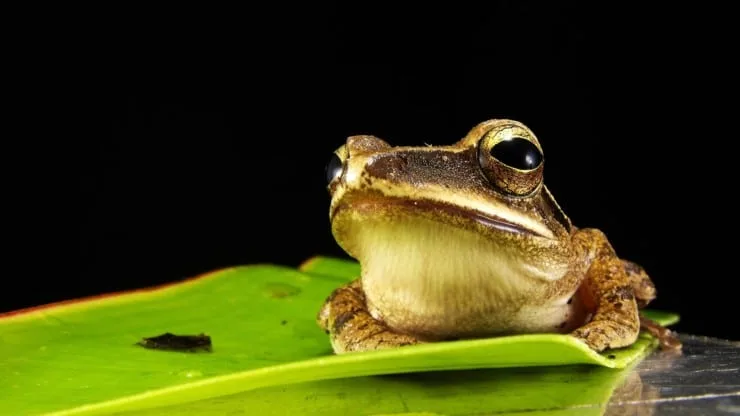
The best-documented case of frogs in toilets comes from Florida, where the invasive Cuban treefrog gets into plumbing so often that UF/IFAS has a publication on it. I found no extension source that documents native gray or green treefrogs entering through vents, only informal reports. The mechanism is the same, so I'd use the same prevention anywhere, but that is my judgement.
UF/IFAS gives these ways to tell a Cuban treefrog from a native one:
- Size: a treefrog longer than 3 inches in Florida is almost certainly a Cuban treefrog. Most adults are 1.5 to 2.5 inches, and females can pass 6 inches.
- Toepads: Cuban treefrogs have exceptionally large toepads and large, bug-eyed eyes.
- Head: the skin on top of the head is fused to the skull, and the back is usually warty.
Native gray treefrogs, common across the eastern U.S., are usually 1.25 to 2.5 inches, according to the Missouri Department of Conservation. They are known for climbing on windows at night and resting on porches, gutters and decks, so a gray treefrog turning up near a house is ordinary. UF/IFAS Escambia County notes native green treefrogs have smooth, bright green skin with a white side stripe, which Cuban treefrogs lack.
Outside Florida, a photo sent to your county extension office is the quickest way to get an identification.
Getting It Out
- If the frog is out of sight in the trap bend, close the lid and give it time. It may surface on its own; I found no extension source on this, so that part is judgement.
- Put on rubber gloves, or put a plastic grocery bag over your hand. UF/IFAS says Cuban treefrog skin secretions are extremely irritating to the eyes and nose, with burning that can last over an hour.
- Scoop it out with a net, small bucket or plastic container. Move quickly and decisively. UF/IFAS says to be swift when grabbing these frogs.
- If it is a native species, release it in a shaded, damp spot in your yard. UF/IFAS advises against moving frogs far, because they can find their way back to where they were.
- Wipe the seat and floor, and wash your hands.
If you can't identify the frog and don't want to touch it, call a pest or wildlife professional. UF/IFAS tells homeowners with a nuisance frog problem to call a professional.
If you are in Florida and the frog is a Cuban treefrog, don't release it elsewhere. UF/IFAS says it is against Florida law to release a non-native animal without a permit. It publishes humane methods for killing one, which are chilling the bagged frog in a refrigerator for 3 to 4 hours and then freezing it for 24 hours, or applying benzocaine ointment. Confirm the species first, because native frogs are not a target. Sightings can be reported through EDDMapS.
Why Not Flush It?
I found no study testing what flushing does to a frog, so this part is judgement. A frog that has gone down into the drain may lodge in the trap or further along the line. UF/IFAS says Cuban treefrogs have clogged sink drains, which is a good reason not to push one deeper. A frog stuck in a pipe also keeps the problem inside your house.
Flushing a live animal is also needlessly cruel when a net and a minute of effort will do. Native treefrogs eat insects, spiders and other invertebrates, so they are worth returning to the garden.
Keeping Frogs Out
UF/IFAS says to cover roof vent pipes with hardware cloth, and shows a homemade cover using hardware cloth and cable ties. Ready-made pipe covers are sold at home-improvement stores. There is usually one pipe for each bathroom and the kitchen, so cover all of them. Roof work is a fall risk, and a plumber or roofer can do it if you are not comfortable up there.
Other measures:
- Close the toilet lid and keep the bathroom door shut.
- Close or screen windows near the bathroom, and shake out outdoor plants before bringing them in.
- Trim low vegetation near the house. UF/IFAS says to block hiding places under decks, A/C units and around building edges, and trim low-hanging vegetation to about 6 inches off the ground.
One caution about the mesh. North Dakota State University Extension says vent pipes under 4 inches in diameter can freeze shut when moisture in the vent gas turns to frost. NDSU does not discuss screens, but in a cold climate I'd use coarse hardware cloth and ask a plumber, because a fine screen gives frost more to cling to. That is my inference, not an NDSU statement.
Wash Up Afterward
The CDC says reptiles and amphibians are more likely than other pets to carry germs that can make people sick, and that even healthy animals can carry Salmonella. Wash your hands with soap and running water after you handle one. Children under 5, adults over 65 and people with weakened immune systems are more likely to get sick. The CDC says children under 5 should not handle amphibians, so keep them out of the cleanup.
Frequently Asked Questions
How does a frog get into a toilet?
Most often it falls down a roof plumbing vent, or jumps in through an open bathroom door or window. A cracked sewer line is possible but less likely.
Is a frog in the toilet dangerous?
Not usually, but handle it with gloves. UF/IFAS says Cuban treefrog skin secretions can cause burning in the eyes and nose, and the CDC says amphibians can carry Salmonella, so wash your hands afterward.
Should I flush a frog down the toilet?
No. It can lodge in the drain, and UF/IFAS reports that Cuban treefrogs have clogged sink drains. Scoop it out with a container and release it in your yard if it is a native species.
How do I stop frogs coming up through the plumbing?
Cover each roof vent pipe with hardware cloth, fixed with cable ties or a store-bought vent cover, and keep bathroom doors and toilet lids closed.
What if I live in Florida and it's a Cuban treefrog?
Don't release it. UF/IFAS says releasing a non-native animal without a permit is against Florida law, and recommends reporting sightings through EDDMapS and confirming the species before taking action.
Sources
- UF/IFAS Extension: The Cuban Treefrog in Florida (WEC218) (vent pipes, bathrooms, hardware cloth, identification, skin secretions, reporting)
- UF/IFAS Extension: Managing Conflicts with Wildlife, Living with Frogs (WEC349) (vent stacks, hardware cloth, handling, not relocating frogs, calling a professional)
- UF/IFAS Extension Escambia County: Cuban Treefrogs May Be Coming (plumbing and toilets, skin secretion, native green treefrog appearance)
- Missouri Department of Conservation: Gray Treefrog and Cope's Gray Treefrog (size, habits near houses, diet)
- CDC: Reptiles and Amphibians (Salmonella, handwashing, children under 5)
- North Dakota State University Extension: Protect sewer vents from freezing (vent pipe sizes and frost)
- Hunker: How to keep frogs out of your toilets (entry routes, sewer break signs)